
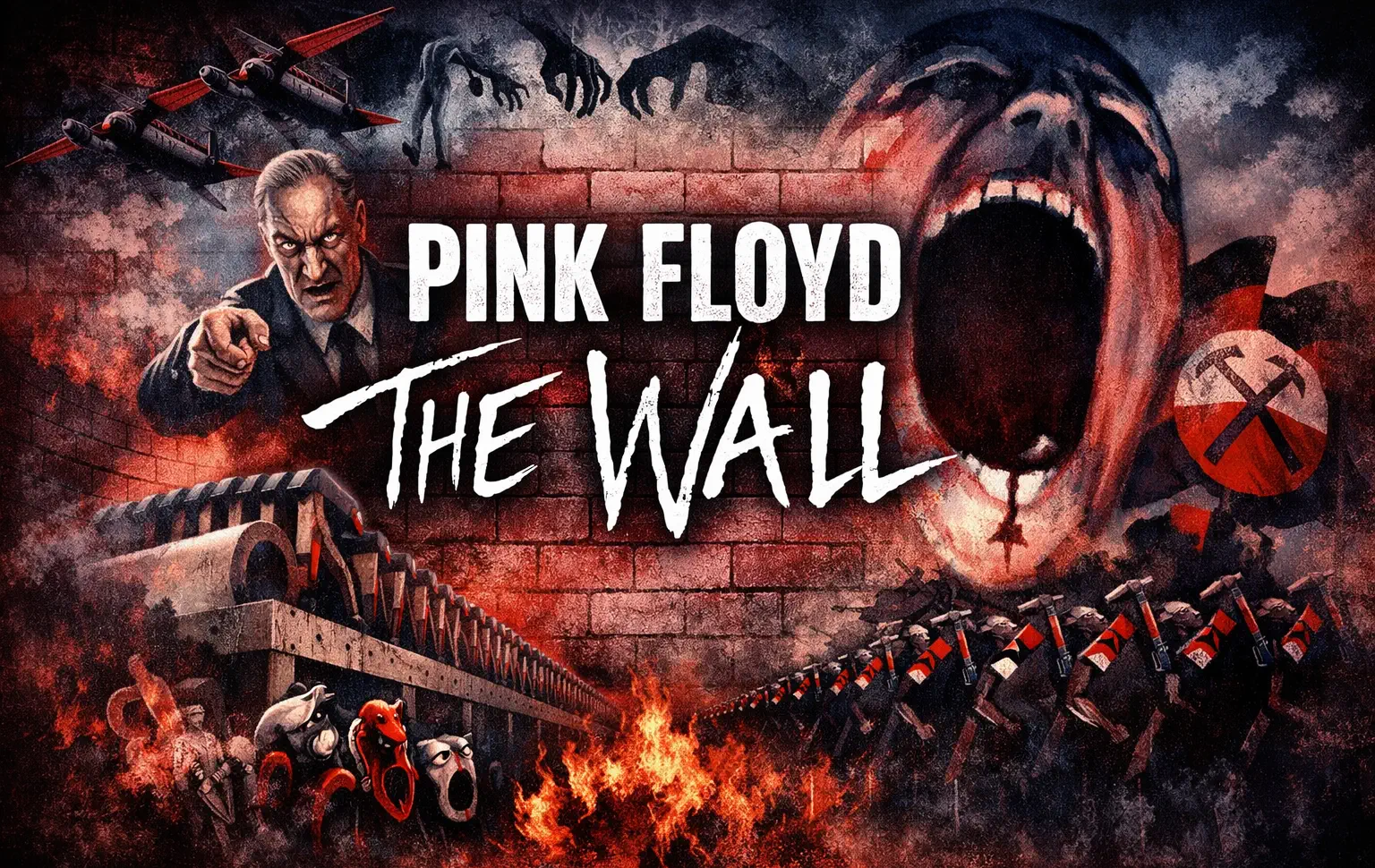
From Early Days to a Landmark Film Experience
Before The Wall became one of rock’s most iconic films in 1982, Pink Floyd were a group of experimental outsiders, pushing the limits of psychedelic sound in late-’60s London. Their early years were filled with restless creativity, bold experimentation, and the beginnings of the isolation and tension that would later define their work. By the time the movie hit screens, that same spirit had evolved into a darker, more cinematic experience. Pink Floyd – The Wall isn’t just a visual companion to the album — it plunges viewers into the emotional and psychological world of Pink, translating decades of artistic growth into a film that remains unforgettable, confronting, and deeply symbolic.
Stepping Inside the Wall: History and First Impressions
The first time I watched the movie The Wall, I was 10 years old. Every note, image, and line of dialogue was a brick in a wall separating my early experience of childhood — from the world a world I didn’t know.
Pink Floyd started in the late ’60s as experimental outsiders, but by the late ’70s, fame had fractured the band. The Wall movie grew from that isolation and tension, turning personal struggle into a visual experience that’s equal parts art, horror, and confession. From what I can remember anyway, lol.
“How Can You Have Any Pudding If You Don’t Eat Your Meat?”
One scene that perfectly captures the film’s disturbing yet iconic power is the classroom sequence, where the teacher bellows:
“How can you have any pudding if you don’t eat your meat?”
It’s absurd, it’s terrifying, and it’s unforgettable. The line has become emblematic of the movie’s critique of authority and conformity. Seeing it played out visually, with children marching into oppressive routines, gives it far more weight than the album alone could convey. In that moment, the movie strips away pretense — you’re not watching a story unfold; you’re witnessing control and societal pressure grinding down individuality.
Watch the Full Pink Floyd – The Wall Movie
For those ready to experience it all, here’s the full film. From start to finish, you can watch the complete descent into Pink’s world — every song, every scene, and every unforgettable line brought to life in Alan Parker’s uncompromising vision.
Other Iconic Sequences
Beyond the classroom, several sequences cement The Wall as a landmark film:
- The Wartime Animation – haunting visuals of conflict and devastation reflecting Pink’s inner trauma.
- The Fascist March – a chilling allegory for authoritarian control, blending music with stark imagery.
- The Trial – a surreal climax where Pink confronts his own isolation and self-imposed barriers.
These moments, combined with the film’s experimental style, show why The Wall is more than an album brought to the screen — it’s a cinematic exploration of the human psyche.
Why the Movie Remains Relevant in 2026
Even more than 40 years after its release, The Wall continues to resonate because its themes are timeless. Isolation, societal pressure, and the struggle to maintain individuality in a world obsessed with conformity feel just as urgent today as they did in 1982. In 2026, the film mirrors modern anxieties — from digital echo chambers to constant social media comparison — showing that Roger Waters’ wall isn’t just a personal story, it’s a cultural reflection that still speaks to our fears, frustrations, and the human need to break down barriers rather than build them.